Fiscal restraint without austerity: This is about being more productive – without cutting services
Steadying the Ship: Efficiency, Stability and Jersey’s Long-Term Future.
Despite the difficult circumstances which led to him becoming Chief Minister, Deputy Lyndon Farnham believes that he and his ministerial team have delivered more than expected since 2024, as he explains to Michael Morris
It was a position he had publicly courted previously but would not have foreseen the exceptional circumstances with which the job came.
“It is an honour and a privilege to do this job,” he said. “I am extremely grateful to the Assembly for placing their trust in me.”
“We inherited a fragmented position. I’d like to think that this Council of Ministers has reintroduced some stability and consistency.”
Despite leading a council made up of what he describes as a “broad church of political views”, he said ministers have worked collegiately, often setting aside personal or political preferences to “put the Island’s interests first”.
The end of any year is a perfect opportunity to reset, take stock and plot out a plan of action for the year ahead. With 2026 being an election year – Islanders will go to the polls on Sunday 7 June – that takes a sharper focus.
Two years into the job, Deputy Farnham believes his government has delivered more than expected.
“If you look at the Common Strategic Policy priorities, we have delivered on practically all of them and more besides,” he said.
A cornerstone of that delivery, the St Mary, St Peter and St Ouen representative said, has been the launch of the Investing in Jersey programme, which sets out a 25-year plan for the Island’s major infrastructure projects.
The legislation setting aside the funding, which is expected to be lodged shortly, represents a fundamental shift in how the Island plans and funds capital investment, according to the Chief Minister.
“For the first time, this ringfences money for capital investment. In the past, money budgeted for capital projects sat in the consolidated fund and, if it wasn’t used, could be used to cover revenue overspends.”
That approach, he said, has historically led to a lack of consistency in medium- and long-term planning for public realm projects.
“We tend to think quite short-term and wait for things to break before fixing them.”
At the last election in 2022, then-Deputy Chief Minister Farnham was one of the few members of the Council of Ministers to return to the States Assembly, but he remained coy about his 2026 election plans, instead insisting that the focus for the Council of Ministers must remain on delivery and laying the foundations for the next government.
“Right now, we need to remain focused on the work we want to complete before we enter election mode,” he said, adding that he will make an announcement on his future “in the next month or two”.
In the last major political act of 2025, States Members approved the Budget proposals which contained reference to the need to make future savings but said that this would “require choices to be taken” by the next government.
However, Deputy Farnham pushed back against any suggestion decision-making was being shirked and being left to the incoming government.
“This government will leave office with firm foundations and recommendations in place,” Deputy Farnham said. “It will be up to the next Assembly to decide where they take them.”
Perhaps one of the most striking moments during the week-long Budget debate came when his predecessor Deputy Moore launched an unexpected attack on Deputy Farnham and his government – accusing the current Council of Ministers of failing to deliver on promises to curb public spending, taking a “dither and delay approach”, and suggesting her tenure had been sabotaged by a few civil servants.

The first thing I said when I came into office, and even before then, was that we had a unique situation during the pandemic and that, coming out of Covid, we needed to batten down the hatches and rein in spending. The previous government didn’t do that; we have
Deputy Farnham resisted the urge to fire back during the debate, although some of his ministerial team did rise to reject the criticism.
Addressing Deputy Moore’s remarks, Deputy Farnham said: “I don’t recognise any of the comments she made. In my experience, the civil service have been extremely professional in all of their work.
“I am reluctant to comment on her remarks too much. I will say it was an unfortunate situation [which led to the change of government] but the States Assembly lost confidence in the former Chief Minister, which led to an unprecedented result.
“It wasn’t me or the civil servants that removed Deputy Moore, it was the States Assembly. It is unfortunate but that is what happened.
“From my perspective, we can’t dwell on things like that. We have to keep moving forward and navigate the challenges outlined for the Island’s future. I am grateful to States Members and ministers for moving on quickly from that.”
Deputy Farnham is keen to push back against what he views as a negative rhetoric surrounding the Island’s finances, particularly during the recent Budget debate, which saw criticism levelled at plans to reduce funding to the Island’s Social Security Fund. Islanders should “feel confident” in the state of Jersey’s public finances, the Chief Minister said, adding that it was important to remember that ministers had produced a “balanced Budget”.
“The first thing I said when I came into office, and even before then, was that we had a unique situation during the pandemic and that, coming out of Covid, we needed to batten down the hatches and rein in spending,” he said.
“The previous government didn’t do that; we have. We are still spending too much – we need to go further but it needs to be done in a sensible, prudent fashion that sets us up for the long term.”
That confidence, however, is tempered by the fact that Jersey’s workforce and economy is facing some unprecedented challenges that, as yet, remain unanswered. An ageing population coupled with a falling birth rate presents questions over the Island’s long-term tax intake, reliance on already stretched public finances and economic productivity.
“These challenges will require careful consideration,” the former Economic Development Minister said. “What we have set out in the Common Strategic Policy and Investing in Jersey strategies is focused on meeting those challenges.”
There are also the small matters of the cost-of-living and housing crises, which have seen large numbers of working-age people leave the Island amid fears that they do not have a viable future in Jersey.
“The cost of living is a big issue,” Deputy Farnham admits. “What we have done is kept government charges as low as possible and any increases have been below the rate of inflation.
“The big challenge for Jersey is that we don’t control monetary policy in relation to pound sterling and when it comes to the big levers like the Bank of England interest rates, we are reliant on the UK and geopolitical situation globally. We have seen significant global situations that have caused global inflation in commodity markets and that filters back to places like Jersey.
“That remains a big challenge but all the levers we can pull, we do. We continue to work tirelessly to solve that and keep the cost of living as low as we can.
“The other big thing is affordable housing. We need to make sure that is available – that it is not just flats, but family homes with gardens where people can raise their families. We have taken considerable steps in that direction and credit should go to [Housing Minister] Sam [Mézec] for that. We have worked closely with Andium on the gateway, we have the Step Up scheme which has helped to put people into housing. That is an important piece of work that needs to continue.”
One of the long-serving politician’s cornerstone policies has been around curbing public spending and growth, including implementing tight restrictions on civil service recruitment and the use of consultants.
“Had we not introduced controls like restrictions on recruitment and consultancy, we would be in a much more difficult situation. While we are in a decent place, our financial position remains tight. We mustn’t lose sight of that.”
However, the latest employment figures show Jersey’s civil service has increased by 27% since the pandemic. Statistics Jersey’s June 2025 Labour Market Report showed that the public sector expanded by 230 jobs to 9,940, while the private sector decreased by 130 jobs to 55,370.
“We have taken hundreds of positions out of central management and put those posts into frontline services where we were understaffed,” Deputy Farnham explained. “So, while there has been some net growth, it is in essential areas.”
Central to this strategy is what the Chief Minister describes as the “most comprehensive review of public spending Jersey has ever undertaken”. Ministerial workshops have been held this week, while the review is due to be published before the election and will examine how the public sector operates and where efficiencies can be found.
“In July last year, I wrote to the chief executive and asked him to conduct a piece of work and map out some options for reducing that. When you are running a small island, the way you structure the public service is important. We have come up with some very sensible, prudent suggestions.
“This is about becoming more productive, halting growth and stabilising the position without cutting the services Islanders need,” he said.
“When you have an organisation this size, it’s like driving a ship. It takes time to change course. But we have done that now and are heading in a sustainable direction.”
Perhaps one of the most tricky areas to navigate in the final few months of this term of office is repairing the seemingly strained relationship with Guernsey, which took a hit in early 2025 when the respective governments could not come together on a joint-Channel Islands ferry service, which ultimately led to Jersey appointing DFDS.
“We have a strong, close relationship with Guernsey – at the higher levels we have the joint office in Brussels, we work together on the British and Irish Council,” Deputy Farnham said.
“I had a strong relationship with my namesake [former Guernsey Chief Minister Lyndon Trott] and I have continued a good relationship with the new Chief Minister [Deputy Lindsay De Sausmarez].
“Sometimes, as we know, we can see challenges and there will always be areas where we want to go our own ways. As well as being sister islands, we also compete in certain areas and it is always about finding the right balance.
“We will always have our challenges but we work together to overcome them.”
And when it comes to the ferry service, the Chief Minister believes DFDS are on the right track after a rocky start which saw the Danish operator become one of the pantomime villains of 2025.
“The service has improved but there is still a way to go,” Deputy Farnham said. “It is essential that DFDS and Brittany Ferries put their differences aside and work together to improve inter-island connectivity. That is a matter for the governments of Jersey and Guernsey, as well as DFDS and Brittany.
“From a Jersey perspective, DFDS are one of the most successful shipping companies in the world. They know what they are doing. They are a sustainable business that is committed to investing in a new fleet and I have full confidence that there will be improvements for the Island in the long term.”
The prospects for Jersey’s long-term future, Deputy Farnham says, are positive. Whether he will be the one steering the ship post-June remains to be seen.

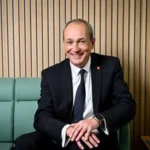
Chief Minister Lyndon Farnham: “We inherited a fragmented position” Picture:



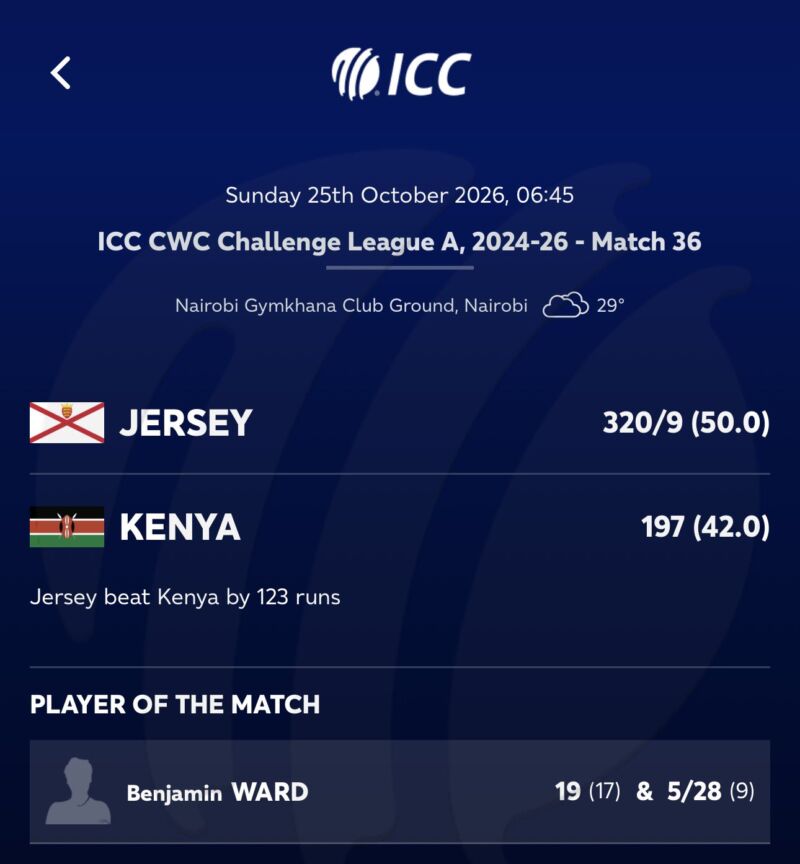
Fantastic achievement for @cricketinjersey beating the hosts in their back yard and Top of the group. Some excellent batting followed up by good performance with the ball and in the field Chapeau to all involved both on and off the pitch 👏👏
#backingred🇯🇪
TWITTER - X

Storm Austen live incident map:
➡️ https://roadworks.gov.je/EWXPublic/